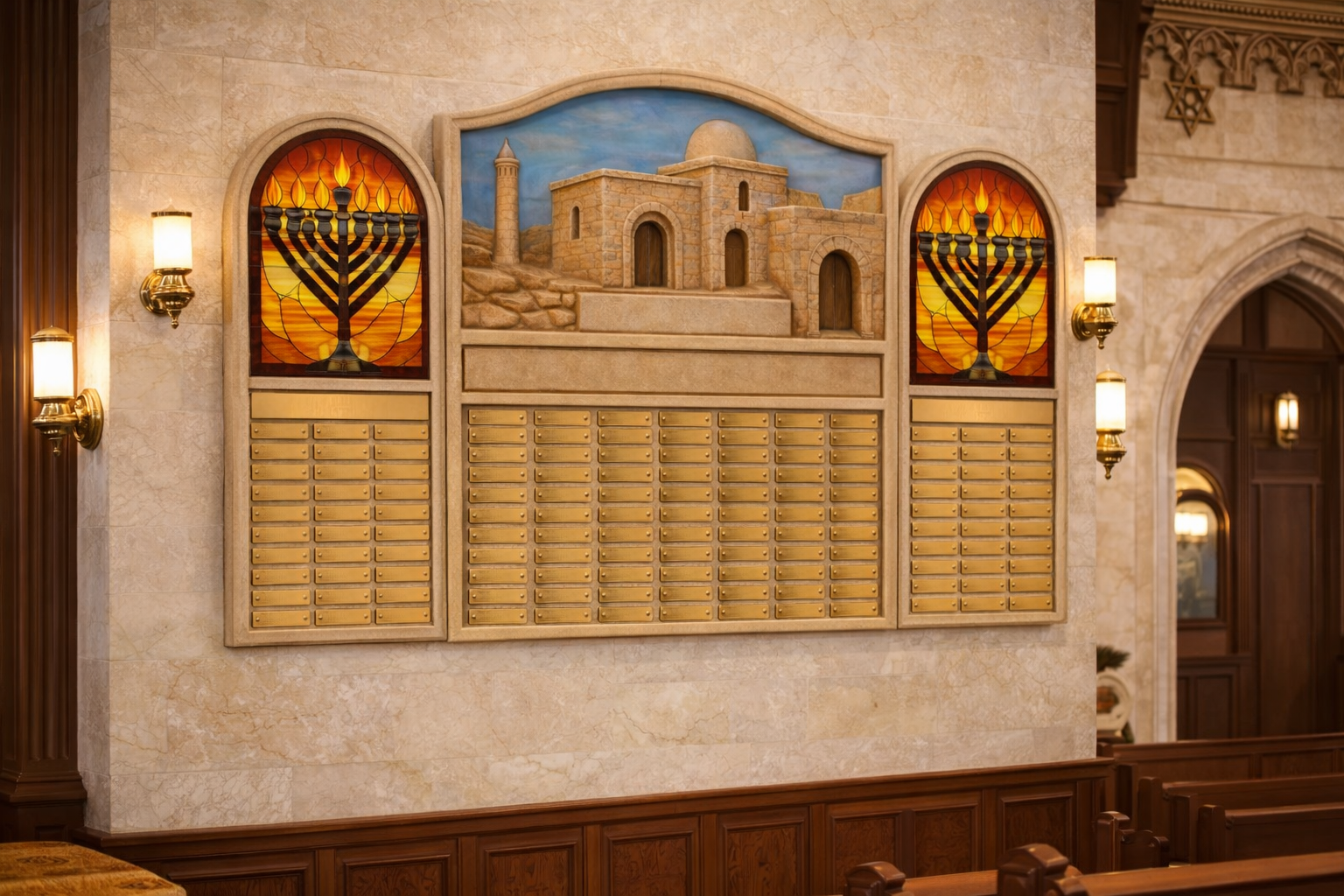
Post-War Antisemitism: "Rootless Cosmopolitans" and the Doctors' Plot
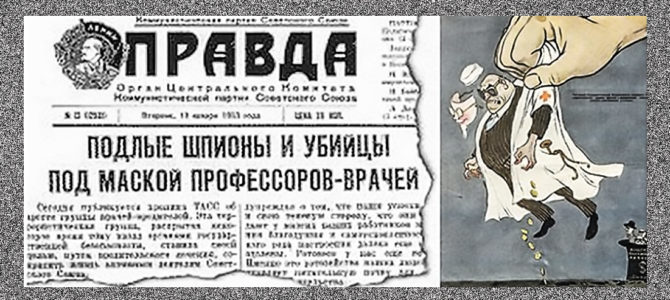
Victory in the Second World War brought Jews no safety. In the final years of Stalin's rule, antisemitism became state policy.
The JAC was created during the war. In 1948 its leadership was arrested. 13 members were executed on 12 August 1952 — the "Night of the Murdered Poets." Among the victims were outstanding figures of Jewish Soviet culture.
Under the guise of fighting "Western influence," Jews were dismissed from academic, cultural, and government institutions. Criminal cases were opened from lists.
TASS announced the arrest of a group of doctor-"murderers" allegedly poisoning Soviet leaders. The majority were Jews. Mass deportation of Jews to Siberia was being prepared. It was halted only by Stalin's death in March 1953.
After Stalin's death, the arrested doctors were freed. But state antisemitism had not gone away — it had merely changed its form.
Mendel Futerfas: 14 Years in the Gulag for His Faith
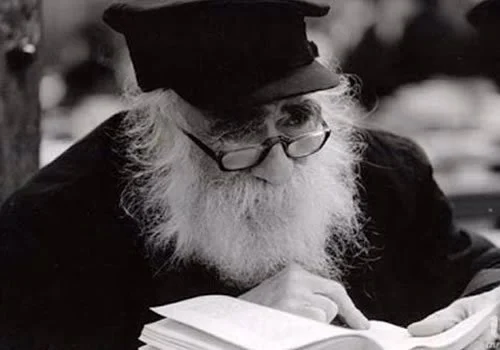
What Futerfas Did Before His Arrest
Mendel Futerfas was one of the key organisers of the Chabad underground in post-war USSR. He coordinated:
- Underground emigration channels for Jewish families from the USSR to Poland and beyond
- Financing of underground yeshivot through illegal money transfers
- Supply of religious items to communities (tefillin, mezuzot, prayer books)
In the Labour Camp
In the Siberian camps, Futerfas did not break. He secretly observed Shabbat as best he could. He obtained kosher food. He told Chassidic stories to fellow prisoners. By his own account, it was in the camp that his faith became unshakeable.
"In the camp I learned what I could not have learned anywhere else in the world: what it means to be a Jew against all odds."— Mendel Futerfas
The Futerfas case is not an exception but a symbol — the fate of hundreds of Chassidim who passed through Soviet camps for the right to pray, study, and remain Jews.
Samarkand: How Chabad Survived in the Heart of the Soviet Union
In 1941–1942, as German armies drove deep into Soviet territory, thousands of Jewish families fled east. Chassidic families from Belarus, Ukraine, and western Russia settled in Samarkand and Tashkent. What began as flight from the Nazis became something no one had planned: in Soviet Central Asia, one of the most vibrant underground Jewish communities of the twentieth century took root.
The local Bukharan Jews — descendants of an ancient community that had lived in these lands for over a millennium — received the arriving Chassidim. Two worlds met, and from that meeting something remarkable grew.
- Several thousand Jewish Chassidim — evacuees and local Bukharan Jews
- Dozens of underground study groups operating in private homes
- Hidden mikvaot — built without permits, carefully concealed
- Illegal shechita — kosher slaughter carried out under threat of criminal prosecution
- Secret wedding ceremonies — Jewish marriages without Soviet registration
- Handwritten texts — prayer books and Talmud volumes copied out by hand
A Yeshiva in the Living Room
Soviet law prohibited religious education of children and youth. Every Torah lesson was a criminal risk. And yet Samarkand had functioning underground yeshivot: dozens of young men studying in private apartments in small rotating groups, curtains drawn. One person always stood guard at the door.
The teachers — those who had survived the camps — passed knowledge on. Books were desperately scarce: Talmudic tractates were copied by hand, page by page. A student who had memorised a tractate would become the teacher for the next student.
Lessons were never held in the same apartment twice in a row. Students arrived one by one, minutes apart, pretending not to know each other. No written notes — memory only. If the militia came, the rabbi became a "house guest" and the students became "neighbours who stopped by for tea."
Sometimes lessons ran with a Soviet radio playing in the kitchen — to drown out the sound of voices learning Torah.
The Masmidim — the Unyielding
Masmid — in Hebrew, one who studies without pause, regardless of any obstacle. In Samarkand, a whole generation of masmidim came of age: young men who did not interrupt their Torah study for a single day despite the total Soviet prohibition. Soviet job by day, underground yeshiva by night. These were people for whom Torah mattered more than career — more than freedom.
"We studied at night. Until two, three in the morning. In the morning — to Soviet work, like everyone else. In the evening — back to the books. That was our real life — the one no one outside knew about."— From the recollections of a Samarkand Chassid, recorded in the 1980s
A Letter to the Rebbe — the Story of Itche
Among the Chasidic children growing up in Samarkand was a boy named Yitzchak — Itche Mishulovin. His family lived under constant Soviet pressure: surveillance, the threat of arrest, a total ban on religious life.
One day Itche wrote a letter to the Lubavitcher Rebbe. One might expect a boy from the USSR to ask for help with the hardships of life. But his letter was about something entirely different.
"What should I do when extraneous thoughts come to me during prayer? What should I do when prayer doesn't go the way it should?"
— Yitzchak "Itche" Mishulovin, letter to the Rebbe from Samarkand
Later, at a farbrengen, the Rebbe spoke of this letter with deep emotion. He described a boy living under Communist pressure — in a place where even writing a letter to the Rebbe was a dangerous act. And yet this child's deepest concern was not how to make his life easier, but how to pray better.
In Chasidic circles this story became known through a phrase in Yiddish: "Vos zol ich ton az s'davent zich nisht?" — What should I do when prayer doesn't come?
This was not a story of complaint. It was a story of a soul. A Jewish child from distant Samarkand was not thinking about comfort — he was thinking about the purity of his prayer. That is what moved the Rebbe to tears.
The Rebbe's Correspondence Network: Thousands of Letters Across the Curtain
Itche's story was not an exception. Through Jews emigrating from the USSR, diplomatic visitors, and Polish Jews travelling west — thousands of letters passed in both directions over the decades. The Rebbe responded to the specific questions of Soviet Jews with their actual conditions in mind: how to keep kosher where no kosher food existed; how to perform circumcision without attracting attention; how to explain to a child what Torah is when you cannot explain it out loud. Itche Mishulovin later became a well-known Chasid, connected to Chabad life and to Jews who came out of the Soviet Union.
By the 1970s, as emigration became possible, the Samarkand community began to scatter. Most went to Israel. They brought with them what Soviet power had been unable to destroy over thirty years: a living, unbroken chain of transmitted tradition — link by link, night by night, in the darkened rooms of Samarkand.
The Lubavitcher Rebbe vs. the Soviet Machine: Fighting for Three Million Jews
.svg.png)
"Workers of the world,
unite!"
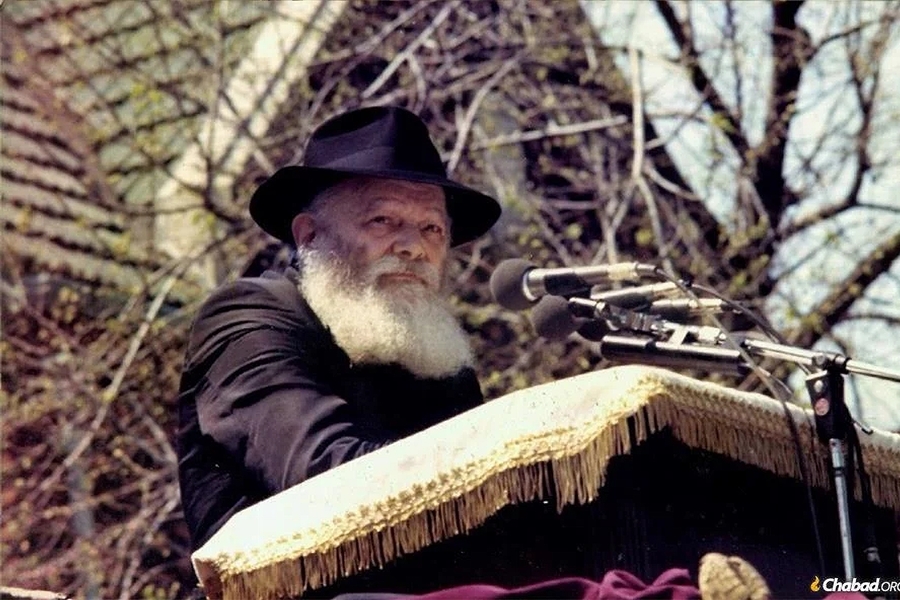
Menachem Mendel Schneerson
While the Soviet state systematically destroyed Jewish life, one man — sitting thousands of miles away in New York — waged a quiet, relentless war for every Soviet Jew by name.
Rabbi Menachem Mendel Schneerson, the Seventh Lubavitcher Rebbe, knew the Soviet regime not as an abstraction. His father — Rabbi Levi Yitzchak — had been arrested by the NKVD, tortured for a year, exiled to Kazakhstan, where he died. This was personal.
A Personal Score with the Soviet System
Menachem Mendel Schneerson grew up in Nikolaev, studied in Leningrad, and saw with his own eyes how the revolution dismantled Jewish life. In 1933 he left the USSR — not as a refugee but deliberately — to study in Berlin, then Paris. When he became Rebbe in 1951, he possessed something no Western politician had: intimate, personal knowledge of how the Soviet system worked from the inside.
His father, Rabbi Levi Yitzchak, was arrested in 1939. A year in NKVD prisons. Then exile to Kazakhstan — to Chi'ili, in the middle of the steppe, without medical care. He died there in 1944. The Rebbe received smuggled letters from his father written in tiny script on the margins of religious books. Those letters survive.
Intelligence: He Knew Every Family by Name
When American diplomats referred to the Jewish population of the USSR as "several million," the Rebbe interrupted: "Three million eight hundred thousand. Let us speak about specific people." State Department officials were stunned by the depth of his knowledge — names, cities, numbers of students in underground classes, the fates of arrested activists.
His sources were underground letters, secret couriers, Jews emigrating from the USSR, foreign journalists, and diplomats. The Rebbe received every visitor from behind the Iron Curtain personally. He listened for hours. He remembered everything.
Eight Methods of Struggle
The Rebbe met with every American president from Eisenhower to Reagan, insisting on one thing: raise the "Jewish question" at every contact with the USSR. He was especially persistent before Nixon's Moscow Summit in 1972. Nixon raised it. The first concessions on emigration followed.
The Rebbe supported and lobbied for this legislation from its inception. Passed in 1974, it tied US–Soviet trade to the right of emigration. Economic pressure ultimately broke Soviet resistance. The Amendment remained in force until 2012.
In 1975 the USSR signed the Helsinki Accords, acknowledging freedom of religion. The Rebbe immediately demanded that this text be turned against the Soviets: "They signed it themselves. Let them comply." He prepared a detailed memorandum on violations for American negotiators.
Every year before Passover, the Rebbe organised matzah deliveries into the USSR — through diplomatic missions, tourists, religious delegations. Tonnes of matzah per year. Practical aid and a message in one: "We know you are there. We have not forgotten you."
The Shamir organisation under the Rebbe's direction covertly shipped Torah scrolls, siddurim, Haggadot, and Hebrew textbooks into the USSR. Channels: tourists, diplomats, Polish Jews. Thousands of copies crossed the border during the Cold War. In a country where publishing religious books was a criminal offence, each one was priceless.
The Rebbe named imprisoned Jews from public platforms, in letters to presidents, in addresses to the UN. The case of Anatoly Sharansky was the most prominent: the Rebbe demanded his release every year from 1977 to 1986 — when Sharansky was finally freed in a prisoner exchange on Glienicke Bridge in Berlin.
At weekly farbrengens in Brooklyn — broadcast by Kol Yisrael radio — the Rebbe spoke directly to Soviet Jews. In 1980 he addressed them in Russian: the Soviet Constitution guarantees freedom of religion — by violating it, the authorities violate their own law. Cassettes circulated across the USSR by secret means.
Thousands of smuggled letters from Soviet Jews — and thousands of personal replies from the Rebbe. He answered the specific halachic questions of Soviet Jewish life: how to keep kosher without kosher food; how to perform circumcision without attracting attention; how to explain Shabbat to a child when it is dangerous. Not one reply was a form letter.
Prisoners of Zion: The Fight by Name
The Rebbe refused to speak of "Soviet Jews" as an abstraction. Every arrested activist became a personal campaign.
Human rights activist and emigration campaigner. Charged with "spying for the CIA" and treason. The Rebbe demanded his release from the first day of his arrest — through open letters to presidents, public rallies, and UN appeals. Released in February 1986 in a prisoner exchange on Glienicke Bridge in Berlin. Today: Natan Sharansky, Israeli political figure.
"Guardian of the Prisoners" — she helped Prisoners of Zion and their families and passed information to the West. After years of emigration refusals, she was sent to Siberian exile for four years. The Rebbe publicly demanded her release. The international campaign gathered signatures across the Western world.
Hebrew teacher — the first "refusenik" to teach the language openly. Every time he was arrested, the Rebbe relaunched the campaign. Released in 1988. Begun's case became an international symbol of the persecution of "refuseniks."
Timeline of the Struggle
"Every single Jew is precious to me as my own limb. We will not leave one Jew behind the Iron Curtain."— Rabbi Menachem Mendel Schneerson, Seventh Lubavitcher Rebbe
The Rebbe had no army and no state. He had a network, relentless persistence, and an unshakeable conviction that history is not written by governments but by people who refuse to surrender. Over forty years he transformed the fate of Soviet Jews from a forgotten tragedy into the central question of the Cold War. The Soviet regime — which had declared war on Judaism — was defeated by a man who never recognised its right to wage that war.
Refuseniks and the Continuing Struggle
After Stalin's death, the repressions became less bloody but did not stop. Chabad continued its underground work. The KGB continued its surveillance.
A 1961 law on "speculation" was applied against producers of matzah for synagogues. Jews who made matzah for their community received real prison sentences.
Dozens of Chassidim went through interrogations, arrests, "psychiatric" examinations, and camps for religious activity.
Soviet Jews began applying en masse for exit visas to Israel. Most were refused. Many were fired from their jobs, expelled from the Party, and prosecuted criminally.
Hebrew teacher and activist, arrested three times by Soviet authorities. His case attracted wide international attention.
"They refused my exit visa. Then they fired me. Then they came and searched my home. But I kept teaching Hebrew and had no intention of stopping."— From the memoirs of a Soviet refusenik, Moscow, 1979
The Collapse of the USSR: The End of an Era of Persecution
With the onset of glasnost (1985) and especially from 1988–1989, Jewish life in the USSR began to revive. Synagogues received their buildings back. Yeshivot were legalised. Public Jewish celebrations became possible.
Two centuries of systematic persecution — from the Peter & Paul Fortress to the Siberian labour camps — did not destroy Chabad, nor the Jewish people of Russia. They forged them.
The same communities that the authorities tried to erase from the face of the earth today operate openly in Moscow, St. Petersburg, and across the former empire.
We Remember
From hundreds of thousands of names — a few, so we do not forget