The Founding of Chabad
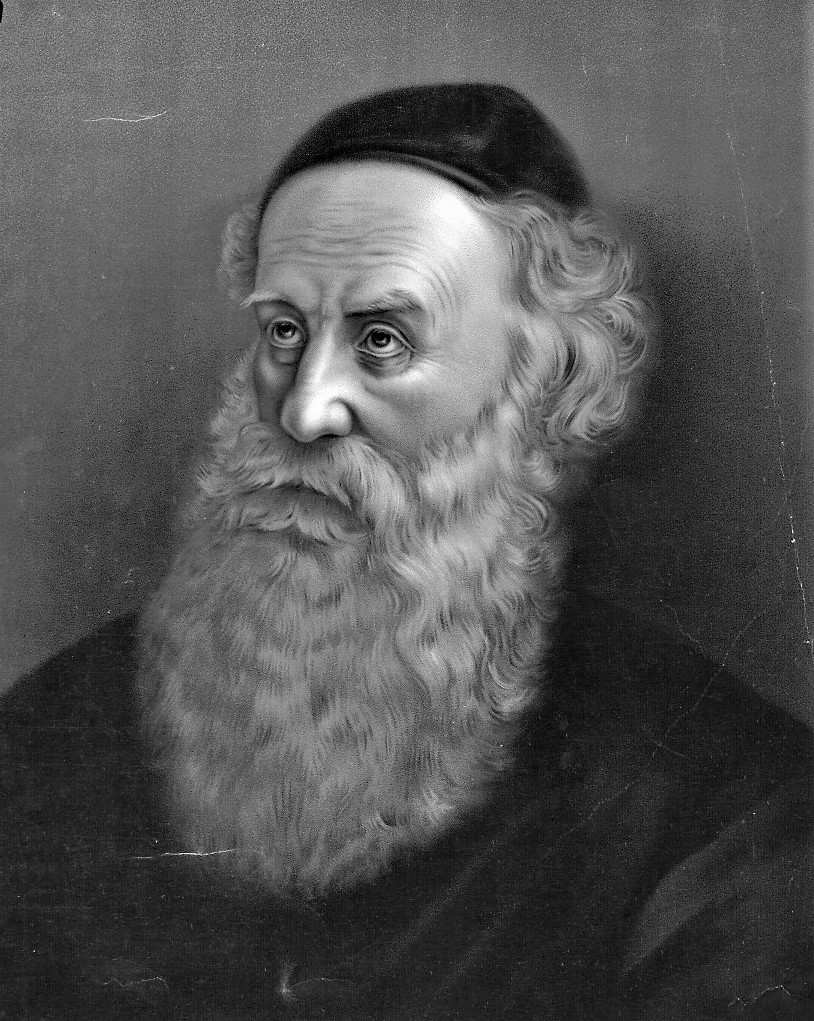
In 1772, a young thinker named Rabbi Schneur Zalman of Liadi (1745–1812) returned from Mezeritch, where he had studied under the Great Maggid. He brought with him a philosophy of Chassidism enriched by profound intellectual depth — Chochma, Bina, Da'at (Wisdom, Understanding, Knowledge) — from which the movement took its name: Chabad.
The new teaching spread rapidly through the Jewish shtetlach of Belarus, Russia, and Ukraine. This rapid growth attracted the suspicion of the tsarist authorities.
- Chochma — Wisdom (the primary spark of an idea)
- Bina — Understanding (developing and expanding the idea)
- Da'at — Knowledge (internalising it into one's being)
From his base in Liadi, the Alter Rebbe built a religious and intellectual movement that would survive two centuries of persecution — from the tsarist prison to the Soviet labour camp.
The Alter Rebbe in the Peter & Paul Fortress: Two Arrests
In the autumn of 1798, the Alter Rebbe was arrested based on a denunciation and brought to the Peter & Paul Fortress in St. Petersburg. He spent 53 days in the Alexeyevsky Ravelin — the most dreaded section of the prison. He was accused of spreading teachings hostile to the government and of maintaining ties with the Land of Israel.
On 19 Kislev 1798, the Alter Rebbe was released. This date is celebrated in Chabad to this day as the "Festival of Liberation" (Yom Geula) — the holiday of spiritual liberation.
In 1800, the Alter Rebbe was arrested a second time. New accusations, another investigation. This time he was released more quickly, but the political pressure never ceased. The tsarist government was deeply suspicious of the growing Chassidic movement and its connections with Jews in the Land of Israel.
"When they come to arrest me, I am not afraid — I know that the Almighty stands with me."— Attributed to the Alter Rebbe during his imprisonment
The Pale of Settlement: A Prison Without Walls
In 1791, Catherine the Great established the Pale of Settlement — a defined zone within the Russian Empire where Jews were permitted to reside. Outside this zone, Jews were prohibited from living without special permission.
Present-day Ukraine, Belarus, Lithuania, Moldova, parts of Poland. Around 5 million Jews were forced to live here.
Prohibited: living in Moscow and St. Petersburg, higher education, most professions, land ownership, freedom of movement.
Extreme crowding in shtetlach, widespread poverty, limited economic opportunities, cultural isolation from European development.
The Pale of Settlement was not simply a geographical restriction. It was a system designed to control, impoverish, and isolate five million people based solely on their religion and ethnicity.
Rabbi Dov Ber Schneerson: Arrested in Vitebsk
Rabbi Dov Ber Schneerson (1773–1827) — son and successor of the Alter Rebbe — continued his father's work despite growing tsarist pressure. In 1826, under Nicholas I, he was arrested in Vitebsk on accusations of "anti-government activity" and ties with foreign elements.
The arrest and months of interrogation severely damaged his health. In 1827 he died on the road in Nizhyn, weakened by the ordeal. He was fifty-four years old.
- 1827 — Cantonist decree: Jewish boys drafted into the army from age 12 for 25 years
- 1835 — "Statute on Jews" — tightening of the Pale, new prohibitions
- 1844 — Dissolution of the kahal (Jewish community self-governance)
70,000 Children Taken: Cantonism and the Arrest of Tzemach Tzedek
The 1827 Cantonist decree was one of the most brutal anti-Jewish measures of the 19th century. Jewish boys — sometimes as young as 8 years old — were seized by tsarist recruiters called khappers and sent to military cantonist battalions far from home.
Quotas per Jewish community. "Khappers" (snatchers) roamed the streets. Boys were torn away in the middle of the night. The goal: baptise them and assimilate them into the Russian army.
From 1827 to 1856, more than 70,000 Jewish boys passed through the cantonist system. Many were baptised by force, losing all connection to their faith and people.
Rabbi Menachem Mendel Schneerson — Tzemach Tzedek (1789–1866) — fought tirelessly against cantonism, petitioning the tsar and negotiating with ministers. In 1843 he was arrested after negotiations with Education Minister Uvarov broke down. He spent time under arrest before being released.
Rabbi Shmuel Schneerson: Defending Jews Before the Tsar
Rabbi Shmuel Schneerson (Maharash, 1834–1882) took a different approach. He travelled to St. Petersburg and European capitals, petitioning governments on behalf of Jews — against forced conversions, against the restrictions of the Pale, against arbitrary arrests.
He died in 1882 — the very year the tsar promulgated the "May Laws" that dramatically tightened restrictions on Jews across the empire. The laws he had fought to prevent became reality after his death.
"Better to go under the ground than to bow down."— Rabbi Shmuel Schneerson (Maharash)
Rabbi Shalom Dovber Schneerson: Founding the Yeshiva Under Persecution
Rabbi Shalom Dovber Schneerson (Rashab, 1860–1920) founded Tomchei Temimim in Lubavitch in 1897 — a revolutionary type of yeshiva that combined in-depth Torah study with Chassidic philosophy. The authorities regarded it with suspicion.
In 1915, with German armies advancing, the Russian authorities deported the entire Lubavitch community, including the Rebbe, deep into Russia. The Rebbe died in 1920 in Rostov-on-Don, in exile, never returning to Lubavitch.
The Waves of Pogroms: State-Sponsored Terror
Following the assassination of Alexander II in 1881 — which was falsely blamed on Jews — waves of organised pogroms swept across the empire. The government not only failed to stop the violence; in many cases it orchestrated it.
Over 200 pogroms across southern Russia and Ukraine. Hundreds killed, thousands of homes destroyed. The government responded with new restrictive laws — against the victims.
49 Jews killed, 500 injured, 700 homes destroyed over two days. The tsarist interior minister was complicit. International outrage spread across the world.
Over 600 pogroms following the 1905 revolution. Thousands killed. The most brutal took place in Odessa (October 1905) — more than 400 dead in four days.
Nicholas II: The Beilis Affair and State Antisemitism
-2.jpg)
Nicholas II was an open antisemite. He personally approved the mass publication of The Protocols of the Elders of Zion — a notorious forgery — as official propaganda. He refused to condemn pogroms and viewed the "Jewish question" as a tool for channelling popular discontent.
Mendel Beilis, a Jewish factory worker in Kyiv, was accused of ritual murder — an ancient antisemitic blood libel. The accusation was fabricated by the tsarist police. The trial lasted two years and drew worldwide attention. In 1913 Beilis was acquitted, but the case revealed the full extent of official antisemitism in tsarist Russia.
By the eve of the 1917 revolution, Russian Jews had endured 130 years of the Pale of Settlement, waves of pogroms, cantonism, and systematic legal discrimination. The revolution seemed, to many, like a promise of liberation. It became something else entirely.